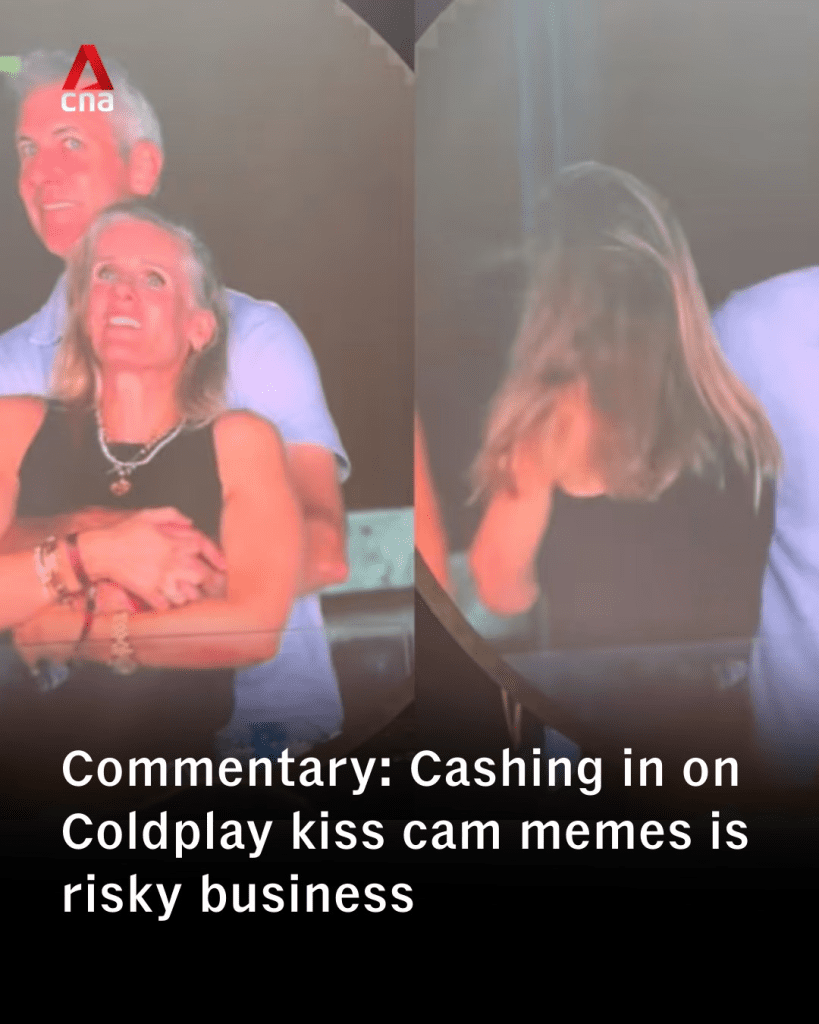
The Coldplay concert incident highlights the dilemma of meme marketing: immense engagement potential, weighed against ethical and reputational risks, says SUSS’ Wang Yue.
The two were seen cuddling when they were caught in the crowd cam at a Coldplay concert, in a video that then went viral.
SINGAPORE: When a kiss cam clip at a Coldplay concert showed two tech executives in a seemingly compromising moment, it quickly amassed millions of views on TikTok and triggered a meme frenzy online.
Brands and organisations were quick to jump in. IKEA Singapore posted cuddly toys with an “HR approved” caption, while the Ministry of Defence referenced the incident in its National Day promotions.
But what some might see as savvy and real-time marketing also had its detractors. Was this clever cultural commentary, or exploiting a personal crisis for clicks?
THE BUSINESS OF GOING VIRAL
Memes have become a marketing tool for brands to tap into humour, relatability and shared cultural moments. It includes using established meme formats, jumping on online trends, or crafting shareable content that rides on viral moments.
The appeal is undeniable. According to news reports, ads containing memes saw 30 per cent engagement rates on Facebook and Instagram, as opposed to the 1 to 15 per cent engagement rate of influencer posts or branded content.
This trend reflects what media theorist Neil Postman warned about in his book, Amusing Ourselves To Death – where entertainment becomes the filter through which all events are processed.
This is especially true in digital spaces where social media algorithms reward engagement above all else, turning serious or private moments into content fodder. The trend is especially pronounced among users aged 13 to 36, with 75 per cent actively sharing memes.
WHEN MEME MARKETING WORKS
Some brands have managed to strike the right tone. US fast food chain Wendy’s “roast” campaigns, where it playfully calls out competitors, earned strong brand recognition by staying bold yet non-exploitative.
In Singapore, the “We let our Gen Z intern write the marketing script” trend resonated widely. It charmed viewers with older executives awkwardly delivering Gen Z slang – a format that worked because it embraced self-deprecating humour, humanised institutions and playfully acknowledged generational gaps.