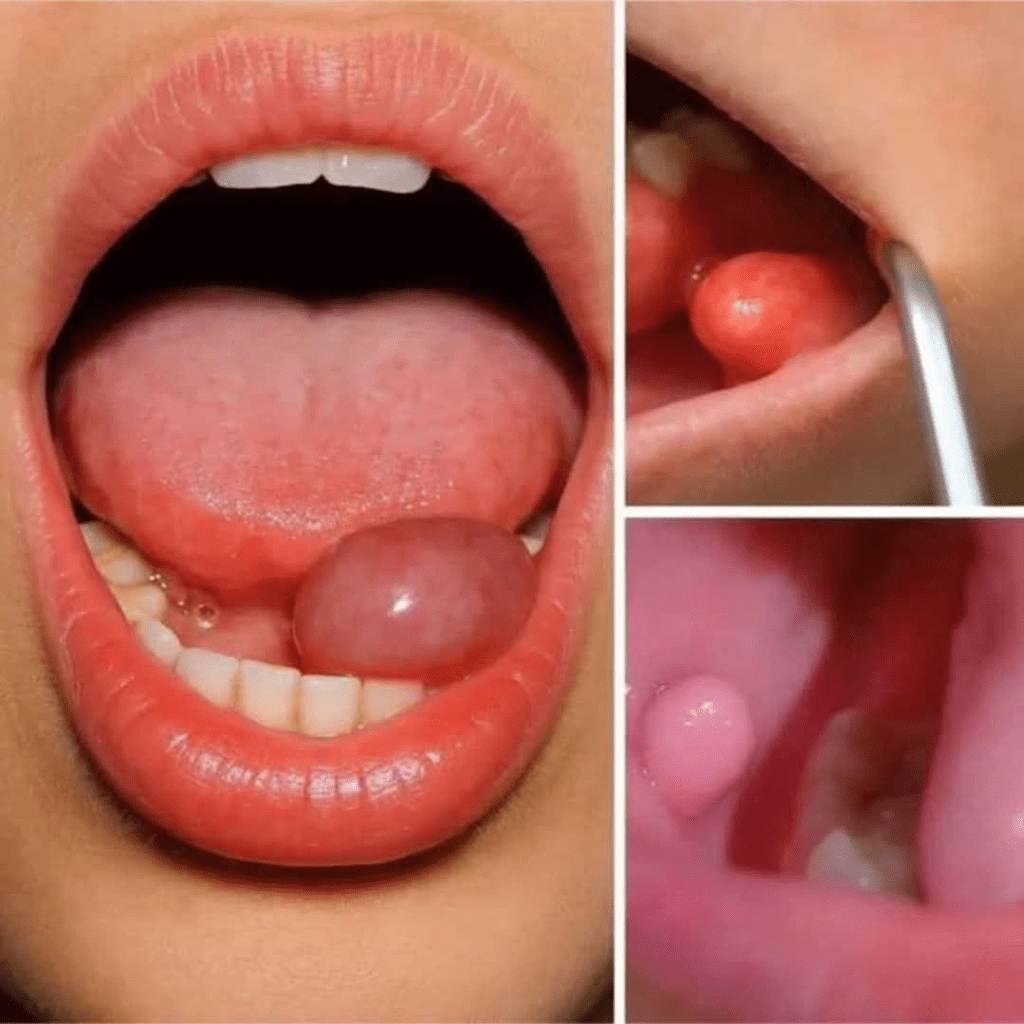
The human mouth is one of the most complex parts of the body, containing teeth, gums, salivary glands, and soft tissues that all work together for speaking, eating, and overall health. However, sometimes unexpected changes occur—such as the sudden appearance of a swelling, lump, or cyst-like growth inside the mouth. The images above depict such oral conditions, commonly known as mucoceles or oral cysts.
A mucocele is a small, fluid-filled sac that develops when the duct of a salivary gland becomes blocked. Saliva, instead of flowing freely into the mouth, gets trapped under the tissue, forming a round, dome-shaped swelling. They often appear on the inner surface of the lips, under the tongue, or inside the cheeks. The size can vary from a tiny bump to a larger, balloon-like cyst, as seen in the picture.
These oral cysts are usually painless, but their appearance can be alarming, especially when they grow larger or interfere with chewing and speaking. They often look bluish, translucent, or shiny due to the collection of saliva beneath the tissue. In some cases, they may rupture on their own, releasing the trapped fluid, but they often recur if the underlying gland blockage remains.
Apart from mucoceles, other possible causes of such growths include:
- Fibromas – Firm lumps caused by irritation, often from biting the cheek or lip repeatedly.
- Abscesses – Infections of the teeth or gums that cause swelling, pain, and pus accumulation.
- Oral Warts or Papillomas – Benign growths caused by certain viral infections.
- Minor Tumors – Rarely, lumps in the mouth may signal precancerous or cancerous growths, which is why evaluation is important.
The psychological impact of discovering a swelling in the mouth is significant. For many people, the fear of cancer or other serious illness immediately arises. While most oral cysts are benign, it is always wise to seek medical or dental advice when unusual growths appear. A dentist or oral surgeon can often identify the condition quickly and recommend the right treatment.
Treatment options vary depending on the cause. For mucoceles, small cysts may not require intervention and can disappear on their own. Persistent or bothersome swellings, however, may need surgical removal of the cyst along with the affected salivary gland to prevent recurrence. Infections or abscesses are typically treated with drainage, antibiotics, or dental procedures to eliminate the source.
Preventing such oral issues often comes down to good dental hygiene and avoiding habits that irritate the mouth. Regular brushing, flossing, and dental checkups ensure that potential problems are detected early. Avoiding lip or cheek biting and promptly treating dental infections can also reduce the risk of developing painful or unsightly lumps.
Ultimately, while oral cysts may look frightening, they remind us of the importance of paying attention to changes in our bodies. The mouth, being a gateway to overall health, often gives early warning signs of underlying issues. Recognizing these changes, seeking professional guidance, and practicing proper oral care can ensure both health and peace of mind.
Would you like me to make this 500-word piece more medical and scientific (with in-depth causes, symptoms, and treatment) or more story-like (about someone discovering a lump and their journey to recovery)?