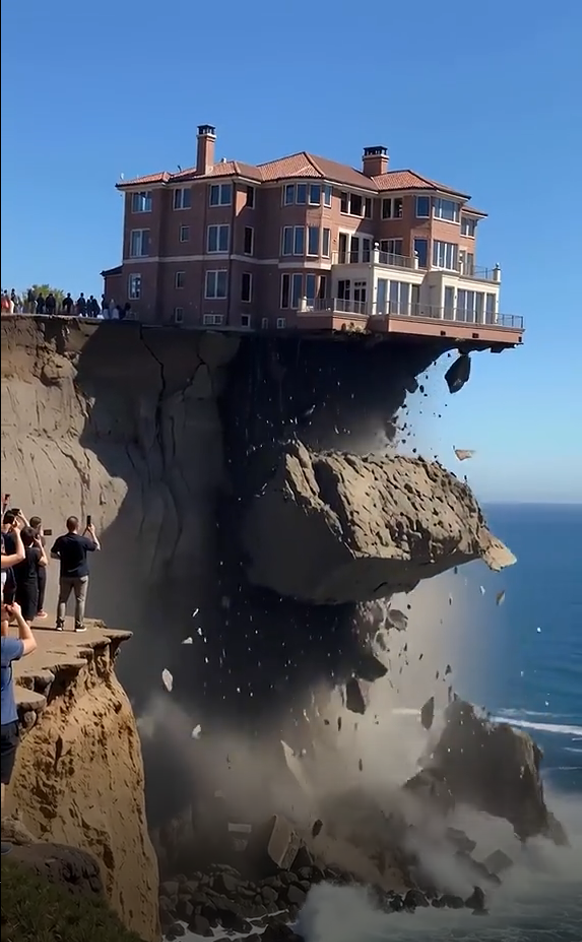
This breathtaking and terrifying image captures a mansion perched on the edge of a collapsing cliff, moments before disaster. The grand house, built with elegance and precision, now stands suspended over a void as massive chunks of the earth beneath it crumble away, crashing into the ocean below. Dust and debris fill the air, while waves violently break against the falling rocks. Onlookers stand at a distance, cameras raised, documenting a moment that powerfully encapsulates the conflict between human ambition and the unstoppable power of nature.
The mansion itself is an architectural marvel — a sprawling, multi-story structure with red-brick walls, numerous windows, and terracotta roofing. It speaks of wealth, luxury, and human confidence in taming the environment. Yet, at this moment, it also stands as a symbol of hubris — a reminder that no matter how solidly we build, nature always holds the final authority. The cliff beneath the house, once firm and commanding, is now riddled with deep cracks. It is literally giving way under the weight of human construction, collapsing into the very sea that once provided the property’s stunning view.
The onlookers at the left of the image underscore the surreal nature of the event. Some hold phones and cameras, frozen between awe and disbelief as they witness the slow-motion destruction of something that once seemed indestructible. The blue sky above and the calm sea beyond form a stark contrast with the violence unfolding at the cliff’s edge — a visual paradox that enhances the emotional weight of the moment. The scene is both majestic and tragic, both beautiful and horrifying.
Geologically, what we see here is a clear case of coastal erosion — a process accelerated by waves, wind, and gravity over time. The constant battering of waves against the base of cliffs weakens the rock structure, forming cracks and cavities. Eventually, these natural forces undermine the land’s stability until it collapses, often without warning. Human activity, such as heavy construction near the edge, worsens this process. The mansion’s foundation likely contributed to the slope’s instability, as its immense weight and the alteration of natural drainage patterns placed additional stress on already weakened rock formations.
From an environmental and urban planning perspective, this image is a cautionary tale. It highlights the risks of building too close to unstable coastlines, where the illusion of permanence often lures people into a false sense of security. Wealth and engineering may delay nature’s course, but they cannot prevent it entirely. The ocean, with its relentless cycles of erosion, reclamation, and renewal, eventually claims what belongs to it. This house, once a symbol of prosperity and prestige, is now a monument to miscalculated human confidence.
On a symbolic level, the image reflects the fragility of modern life and the impermanence of human achievement. The mansion, clinging desperately to the eroding cliff, mirrors the precarious state of human civilization in the face of climate change and environmental neglect. It evokes a profound sense of humility — a reminder that our most beautiful creations can become ruins in an instant.
Ultimately, this image freezes the exact moment when human ambition meets natural inevitability. It is both a spectacle and a warning — a visual metaphor for imbalance, a demonstration that beauty and disaster often coexist at the edge. The collapsing cliff beneath the mansion does not just signify geological failure; it represents a broader truth: when humans build without respect for nature’s boundaries, collapse is not a matter of if, but when.