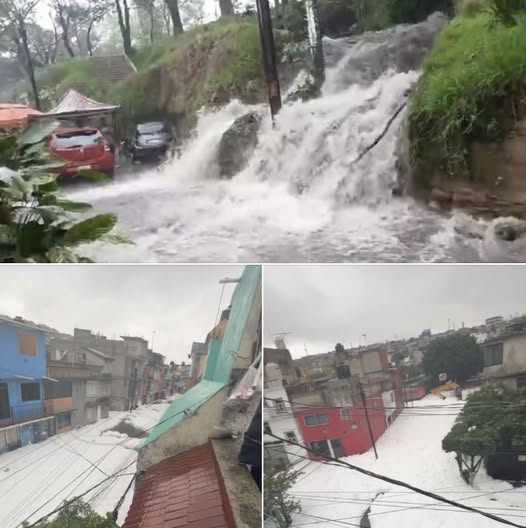
The image collage vividly captures a powerful urban flood event, showing both the raw force of nature and the vulnerability of city infrastructure. The top image depicts a torrent of white, foamy water cascading down a hillside road, transforming a normally quiet street into a violent stream. Cars are half-submerged as the water surges past them, and the muddy foam suggests that debris and runoff from higher ground are contributing to the flood’s volume. Vegetation and retaining walls appear overwhelmed, highlighting how quickly natural barriers can fail when intense rainfall exceeds drainage capacity.
In the lower two images, the scene shifts to a residential neighborhood blanketed by thick, white foam. Streets and rooftops are covered, giving the appearance of a bizarre snowstorm in an otherwise tropical or temperate city. Power lines and colorful houses — painted in bright blues, reds, and yellows — contrast sharply against the sea of foam. The dense bubbles may result from detergents, industrial waste, or pollutants mixing with stormwater during heavy rains, a phenomenon often seen in developing urban areas with poor sewage control. This foam accumulation indicates contamination — an environmental warning sign that flooding has carried not only water but also harmful chemical residues into the heart of the community.
The overall imagery paints a dual crisis: environmental pollution and urban flooding. These intertwined disasters underscore the consequences of unchecked urbanization and inadequate water management systems. When heavy rains strike, blocked drainage, deforestation, and soil erosion combine to produce flash floods. Meanwhile, pollutants from industries and households mix into the water, creating the toxic foam that envelops the city streets. The visuals thus serve as a stark reminder that urban resilience depends not only on infrastructure but also on environmental stewardship.
Human vulnerability is also central to these photos. The flooded cars and submerged roads reveal how quickly daily life can be disrupted. Residents likely face property loss, health risks, and logistical paralysis. Contaminated floodwater can spread disease, corrode structures, and contaminate drinking water. For poorer neighborhoods, recovery becomes even harder, as they often lack both insurance and rapid government aid. The dense foam might seem surreal or even visually fascinating, but it represents a toxic hazard — one that can cause respiratory irritation and skin issues upon contact.
Symbolically, the collage captures the imbalance between urban growth and ecological balance. Nature’s power is reasserting itself, reclaiming paved spaces through destructive beauty. The roaring waterfall and the foamy streets are two faces of the same problem: human neglect of sustainable design. The message is not only about the chaos of the moment but also about the deeper need for change — from better drainage systems and stricter pollution controls to green urban planning that respects natural water flows.
In essence, these images freeze a moment of crisis that is both local and universal. They show how cities around the world, especially those expanding rapidly without adequate environmental foresight, are increasingly at the mercy of climate extremes and industrial waste. The floodwaters and foam are not just natural disasters — they are visual manifestations of human choices, echoing the urgent need for cleaner, more resilient urban living.