
Purslane (also known as common purslane, verdolaga, red root, pursley or portulaca oleracea) is an edible plant that is packed full of nutrients, vitamins, and minerals. Although purslane is referred to as a weed, this succulent broadleaf plant has many health benefits. Eating purslane leaves can help to improve digestion, strengthen your immune system, and promote good heart health. You can also use purslane as a topical remedy for irritated skin and help wounds heal faster.
Many people are surprised that purslane weed can be so good for you that it is considered as a beneficial herb. Studies have shown that purslane contains antimicrobial, antidiabetic, and anti-inflammatory properties. This plant is used in cooking, salads, and traditional medicine for its many health benefits.
Although purslane is a healthy edible “weed”, you have to take care when picking the plant. Hairy-stemmed spurge is a poisonous plant that looks like purslane. Also, due to its oxalate levels, purslane may not be good if you are at risk of having kidney stones.
In this article, you will learn about the many science-based reasons to add purslane leaves to your diet. You will find out how to use this succulent weed to address a number of health issues.
Purslane (Portulaca Oleracea) is a Weed with Many Benefits
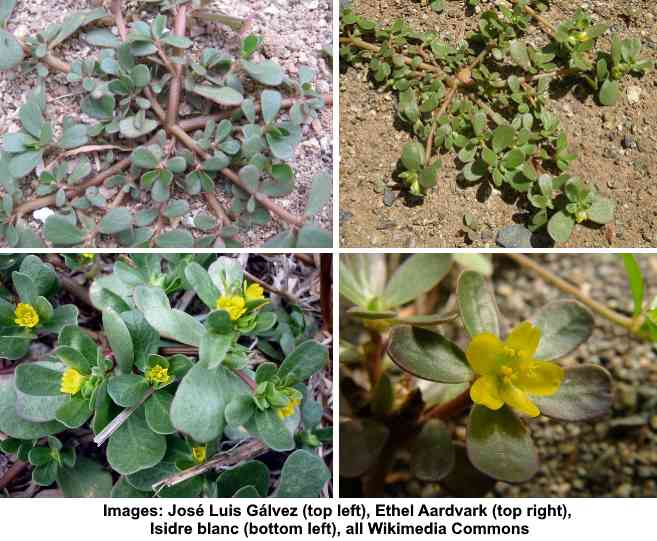
Purslane (Portulaca oleracea) is a common annual plant that thrives in warm, dry climates. Researchers say that the common purslane has succulent foliage and yellow blossoms when it flowers. (1)
Other names for purslane plant include verdolaga, pursley, or red root.
The edible leaves of the purslane plant are oval-shaped and can grow up to just over an inch long (3 cm). Purslane leaves can be eaten raw in salads or cooked in soups, stews or other dishes to give them a crunchy texture.
Some people say that purslane plant leaves taste similar to spinach or watercress.
Purslane vs. hairy-stemmed spurge
One of the reasons to grow your own purslane plant in your backyard is to prevent confusing it with hairy-stemmed spurge.
Purslane (Weed) Nutrition
The nutritional value of purslane plant is so good for you that the World Health Organization (WHO) described the plant as one of the “most used medicinal plants.”
What is it about purslane weed that makes it so healthy?
The United States Department of Agriculture reports that a 1-oz. (28 g) serving of purslane only contains 6 calories and 1 gram of carbs. This serving of purslane has almost 6 g of vitamin C which is 10% of your recommended daily intake. Purslane leaves also contain vitamin A and B-group vitamins. (3)
More of the nutritional benefits of purslane come from minerals. Studies have shown that purslane is a good source of potassium, magnesium, and calcium. These are important minerals for your blood pressure, a healthy heart, and having strong bones.