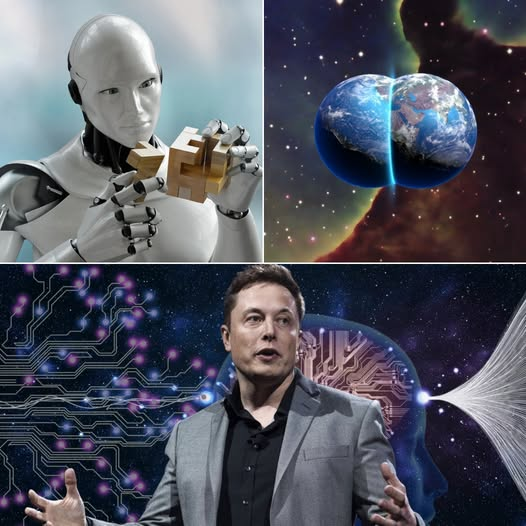
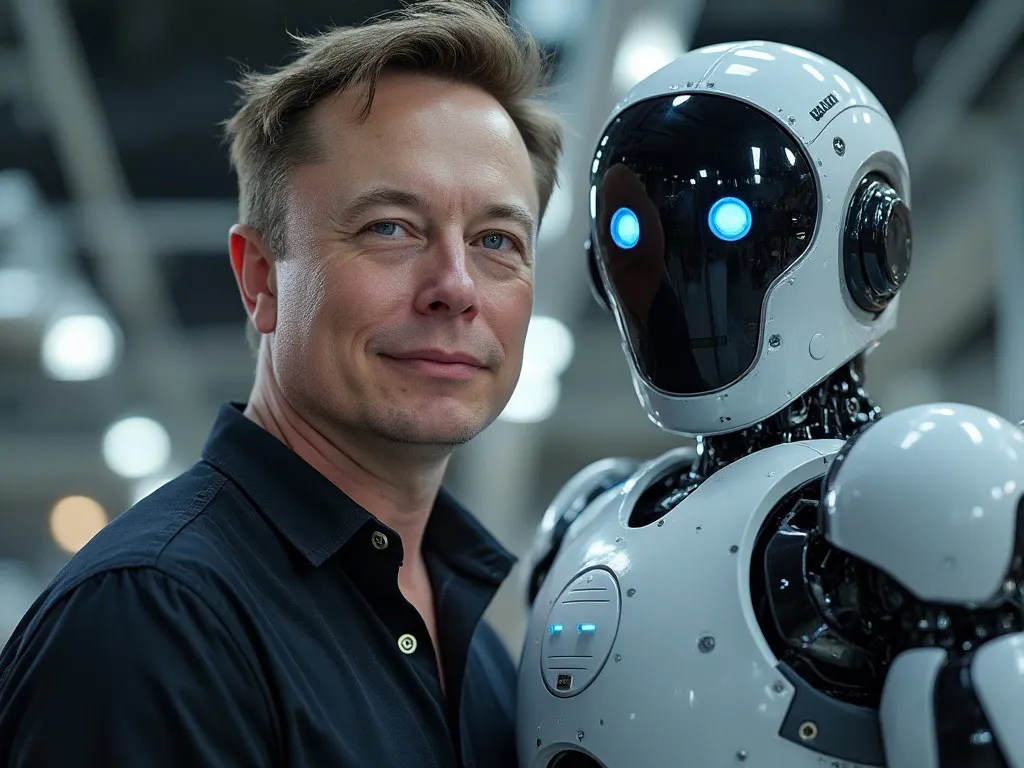
In a bold and provocative statement, Elon Musk has proposed that one day, artificial intelligence (AI) could be advanced enough to create entire simulated universes, so realistic that humans would be unable to distinguish them from our own reality. This idea, which at first glance seems to be pulled from the pages of science fiction, has sparked a heated debate about the potential capabilities of AI and the future of technology.Musk, known for his forward-thinking ideas and controversial remarks, has once again pushed the limits of imagination by suggesting that AI could not only simulate reality but also generate new universes with their own distinct physical laws.Musk’s comments have ignited discussions not only within the tech community but also among philosophers, scientists, and the general public. The notion of creating artificial universes touches upon some of the deepest and most fundamental questions about the nature of existence and reality.
Can technology simulate consciousness, create alternate worlds, or even redefine the very fabric of space-time itself? Musk’s proposal challenges conventional ideas of what is possible with technology and opens up a Pandora’s box of philosophical and ethical implications.
The concept of simulated realities is not new, with theories about the simulation hypothesis gaining traction in recent years. The simulation hypothesis, first popularized by philosopher Nick Bostrom, suggests that it is possible that we are living in a computer simulation created by an advanced civilization.Musk has long been a proponent of this idea, stating that he believes there is a significant chance that we are living in a simulated reality. However, his latest suggestion goes beyond the notion that we could be living in a simulation—it proposes that humans themselves might one day have the power to create such simulations, building universes with their own set of rules and properties.Musk’s idea of AI creating artificial universes implies that these simulated worlds would not just replicate the world we live in but could have entirely different physical laws. This raises profound questions about the nature of existence, consciousness, and reality itself.If AI can create universes with different laws of physics, would these universes be capable of developing their own intelligent life forms? Could AI-driven universes evolve independently, with their own histories, cultures, and civilizations? These are the types of questions Musk’s theory brings to the forefront.